In brief
- Biochar is a carbon-rich material made from biomass in an oxygen-limited heating process.
- It is produced and evaluated for a useful application, commonly in soil, compost or agricultural inputs.
- Ordinary charcoal is primarily made as a fuel. Similar appearance does not guarantee similar properties or suitability for soil.
- Feedstock, temperature, residence time, ash, pH, salts and contaminants can all influence how a char behaves.
A material defined by purpose
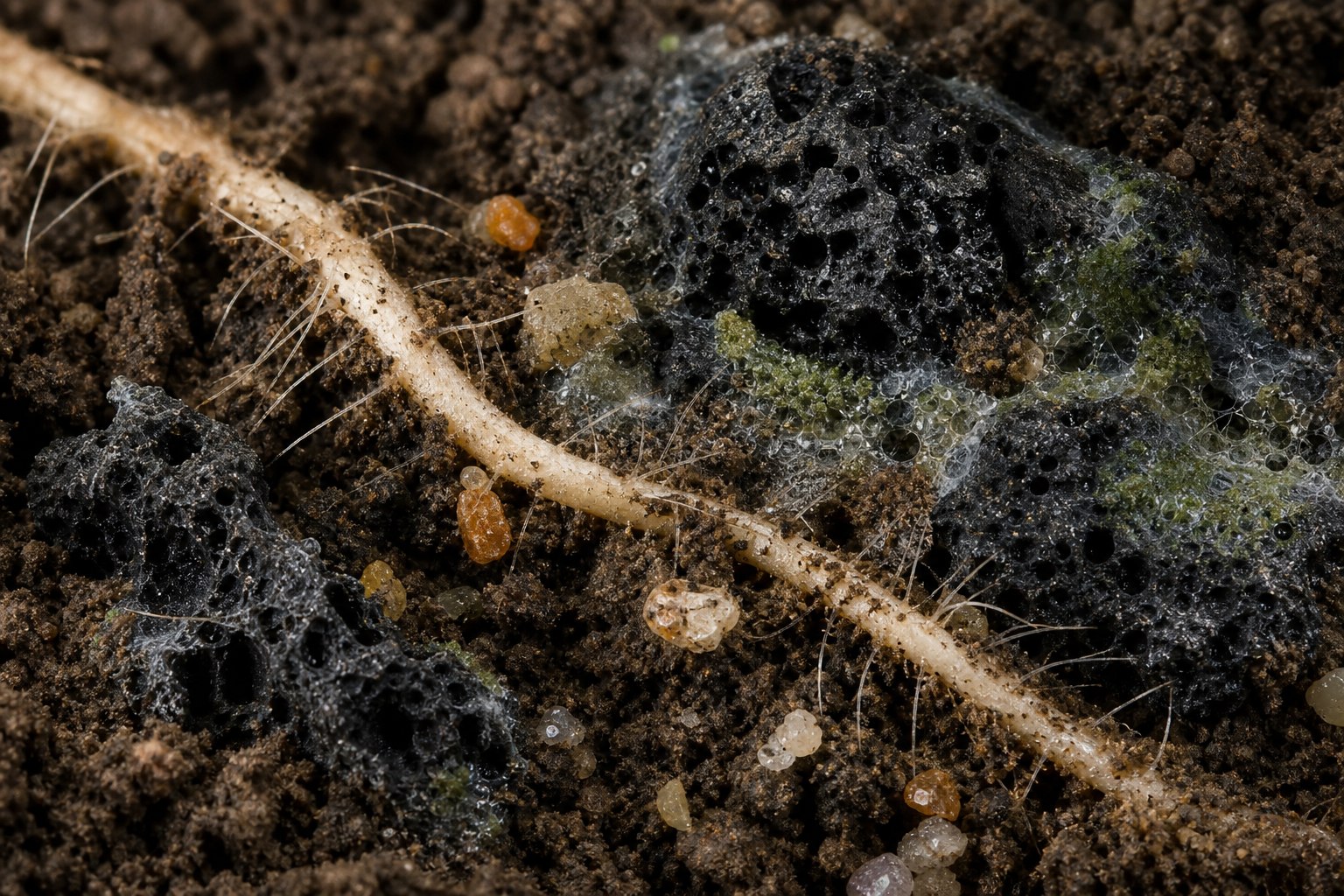
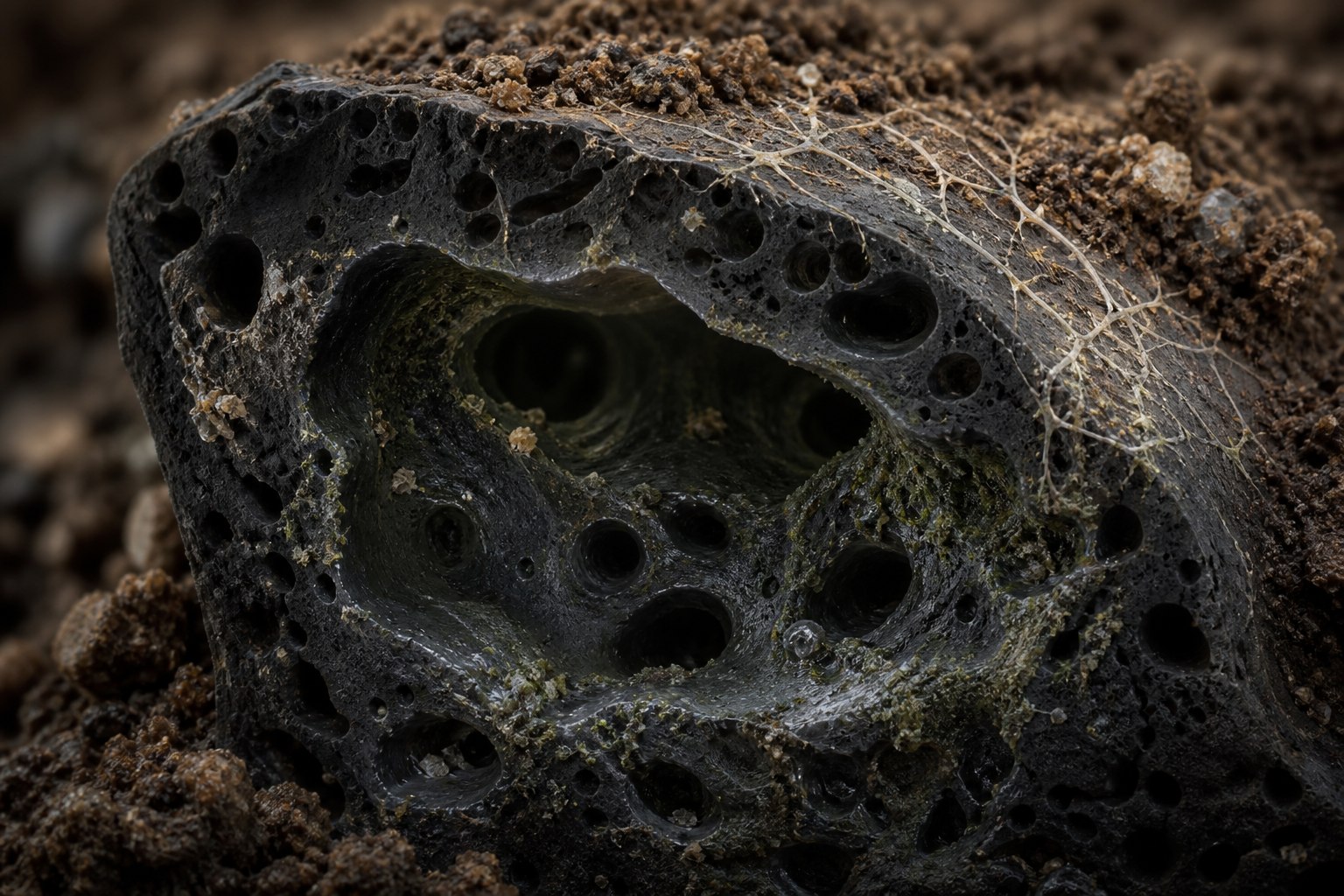
Biochar is produced when biomass such as crop residues, woody material or other suitable biological feedstocks is heated with limited oxygen. This process is called pyrolysis. Much of the easily decomposed material is transformed, leaving a carbon-rich solid with an aromatic carbon structure and a network of pores.
The International Biochar Initiative describes biochar as a material produced from biomass through thermochemical conversion in an oxygen-limited environment. Its standards work also emphasizes something important: the word biochar should not be treated as a guarantee of quality. A material intended for soil use needs appropriate characterization and safe production.
Charcoal may be made through a related thermal process, but its main purpose is usually combustion. Fuel charcoal is judged by properties such as how easily it lights, how much heat it produces and how long it burns. Agricultural biochar must instead be considered in relation to soil, plants, microorganisms, nutrients and environmental safety.
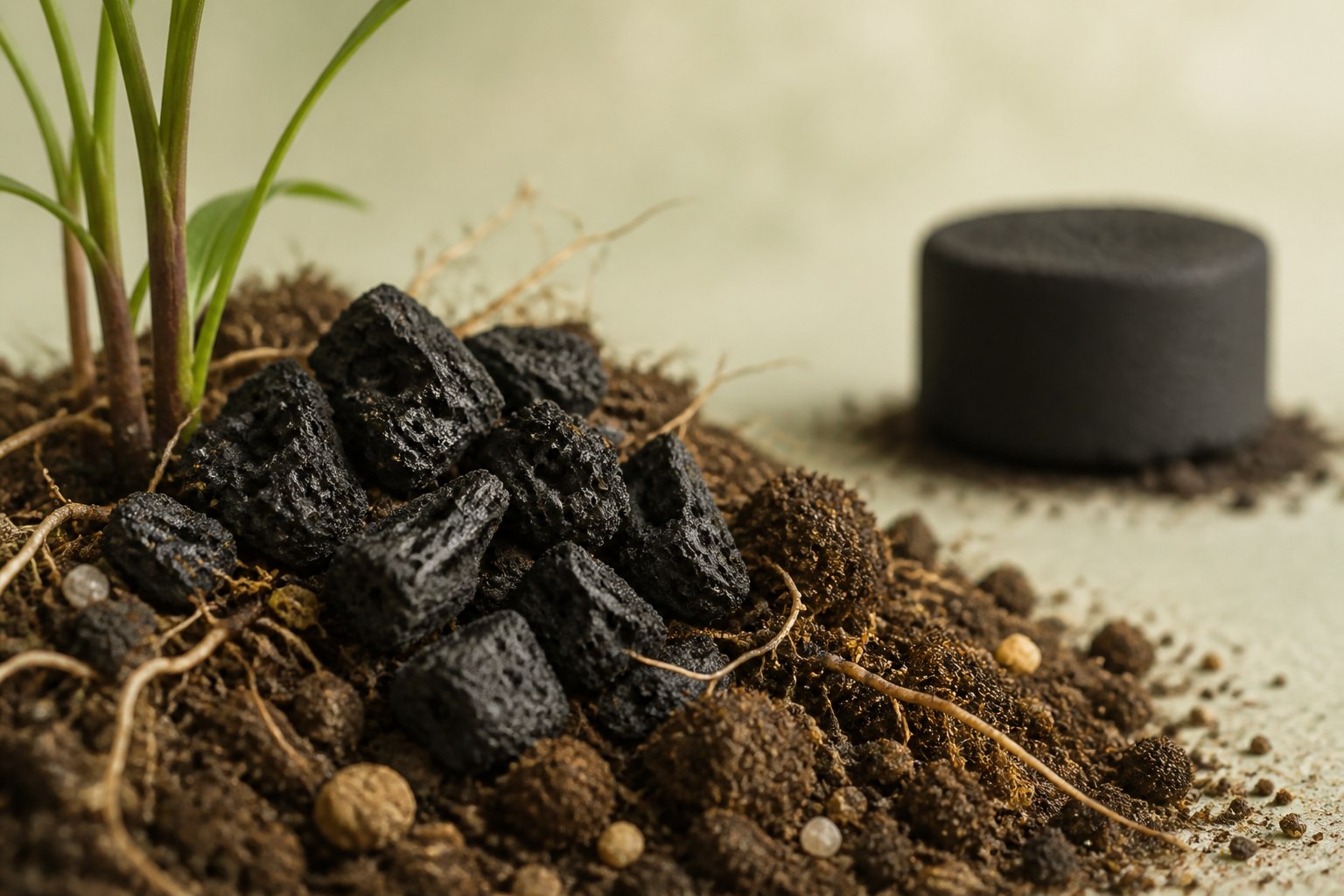
Biochar is not simply “charcoal added to soil.” It is a family of materials whose properties should match the intended agricultural use.
Why two black materials can behave differently
The original biomass matters. A woody feedstock can produce a material quite different from a nutrient-rich residue. Production temperature and time influence carbon structure, volatile matter, surface chemistry, pH and pore development. Post-production handling can also change the material through crushing, washing, aging, composting, nutrient enrichment or biological conditioning.
This is why research results from one biochar cannot automatically be transferred to every other biochar. A high-pH biochar may be useful in one acidic soil but unsuitable in another situation. A material with high ash or soluble salts may require careful assessment. Very fine material can create handling problems even when its chemistry is acceptable.
What biochar may contribute to soil
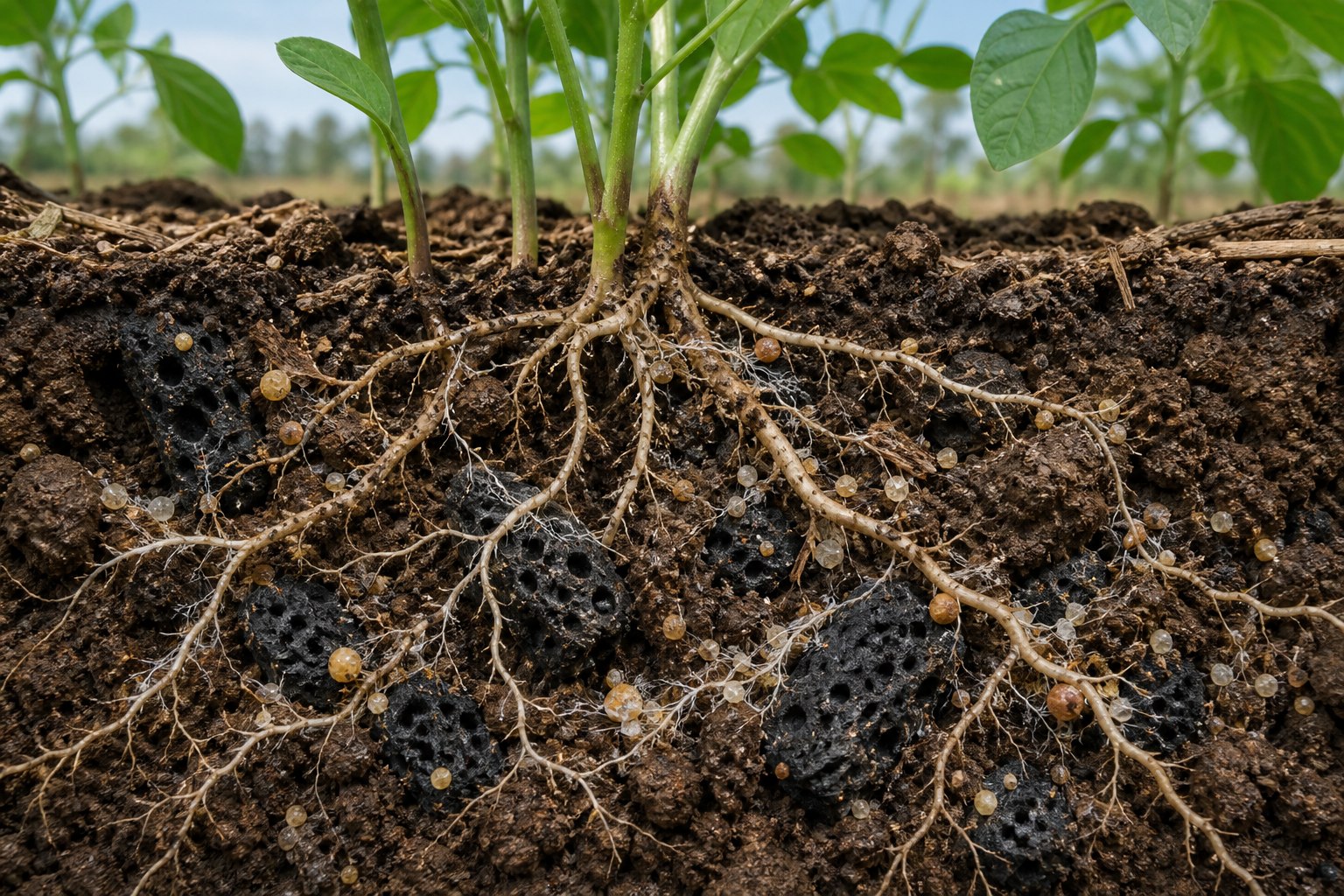
Depending on the material and the soil, biochar can influence water retention, nutrient dynamics, acidity, aggregation and the environment around roots. Its pore structure and developing surface chemistry can interact with organic compounds, minerals and microorganisms. A major scientific review explains that these interactions change as biochar ages in soil; early reactions are not necessarily the same as effects observed months or years later.
None of this means every biochar will increase yield. Biochar is not a complete fertilizer unless nutrients have deliberately been added, and raw biochar may contain too little plant nutrition to meet crop demand. It works best when considered as one component of soil- and crop-specific management.
A practical quality mindset
Before using a biochar for agriculture, useful questions include:
- What feedstock was used, and was it clean and traceable?
- How was the material produced?
- What are its pH, electrical conductivity, ash and moisture levels?
- Has it been checked for relevant contaminants?
- Is its particle size suitable for safe handling and application?
- Is it being used alone, or conditioned with organic matter, nutrients or biology?
- What problem in this particular soil is it expected to address?
The responsible position is neither “all biochar is beneficial” nor “biochar never works.” The right question is whether a particular material, preparation method and application context fit the soil and farming objective.