In brief
- Biochar can provide durable carbon and alter the physical and chemical environment of soil.
- Microorganisms drive many transformations that make nutrients cycle through the root zone.
- Plants still require adequate mineral nutrition.
- The useful question is how carbon, biology and minerals can be combined responsibly for a specific soil and crop.
Three parts of one system
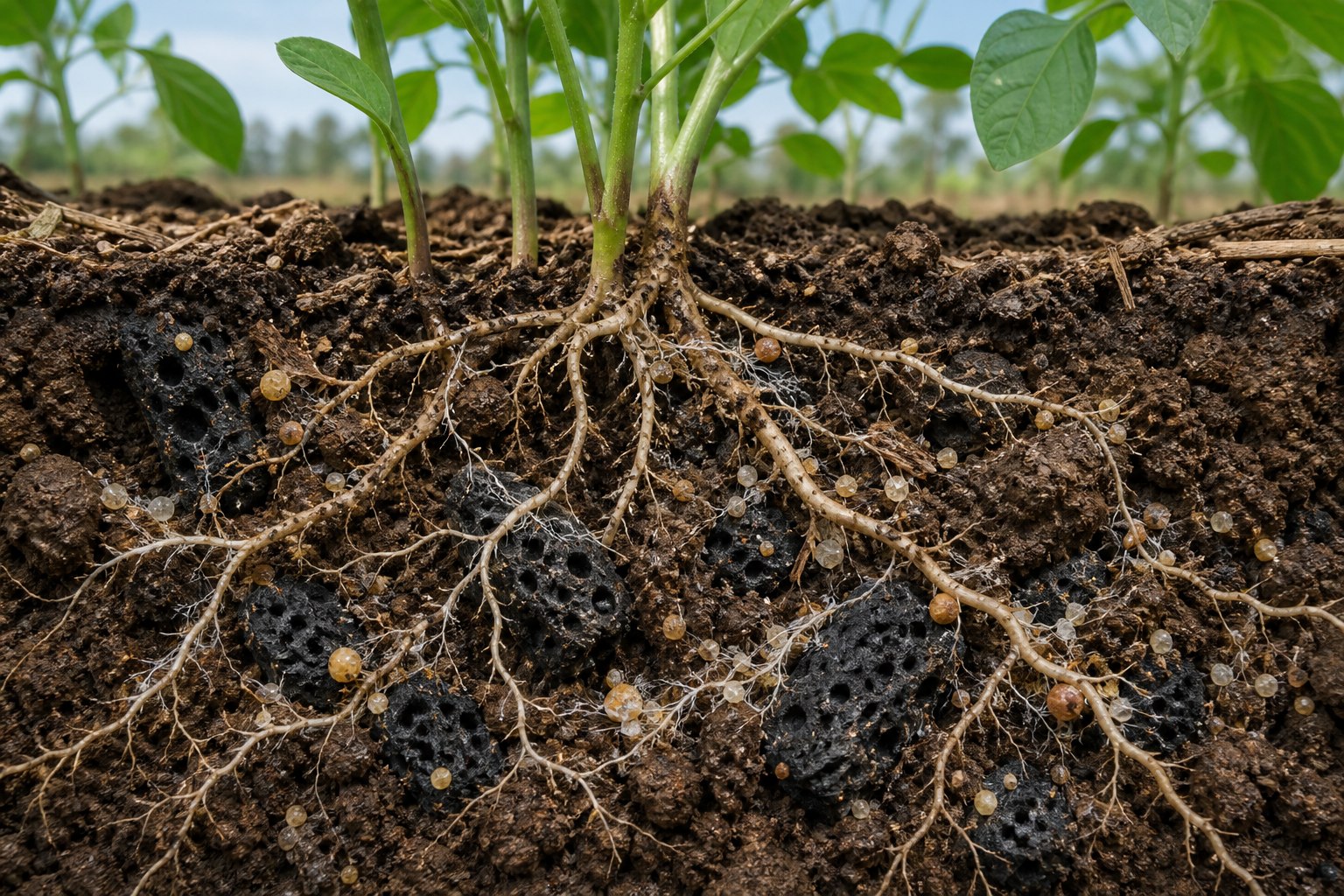
Agricultural inputs are often discussed in separate boxes. Fertilizers supply chemistry. Biological products contain organisms. Organic inputs add decomposable material. Biochar contributes relatively stable carbon and surface area. Roots, however, experience all these factors at the same time.
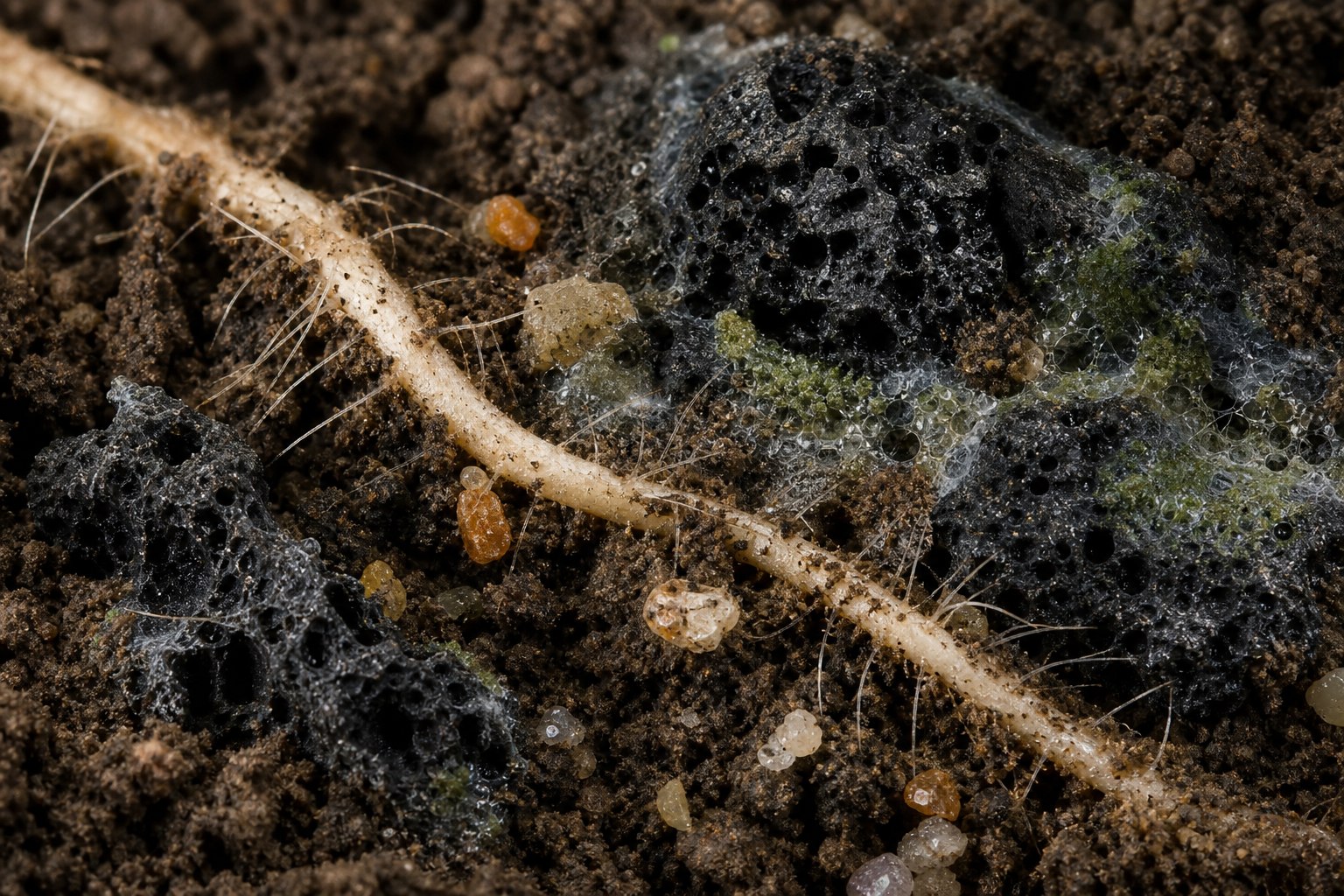
A soil particle can hold water and ions. A microorganism may transform an organic compound or nutrient. A fungal thread may explore soil beyond the immediate root surface. A root releases sugars and signalling compounds that influence nearby organisms. Minerals, organic molecules and biological cells meet in a changing physical habitat.
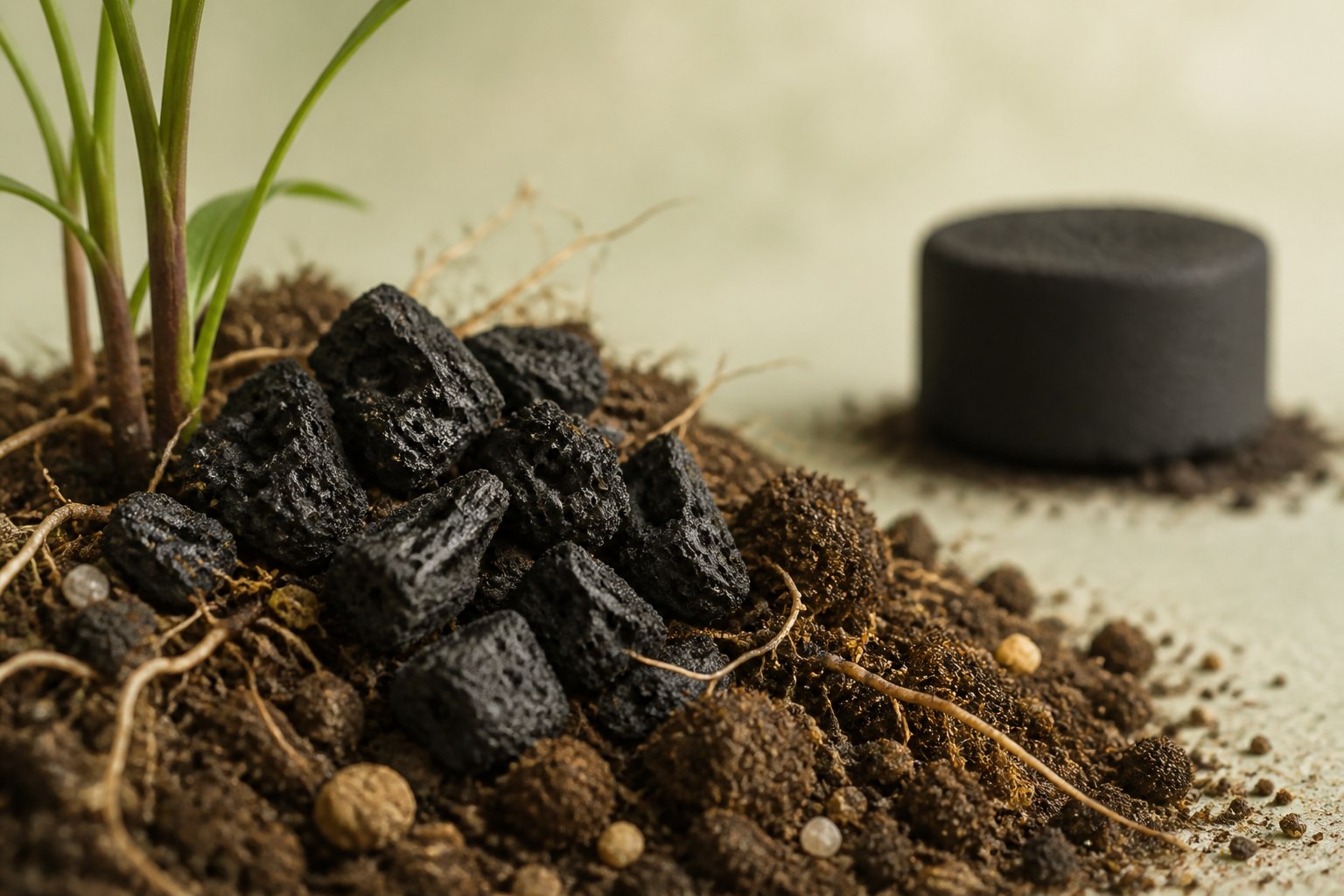
This is why Carbonify views biochar as a platform rather than a finished answer.
What the carbon component can do
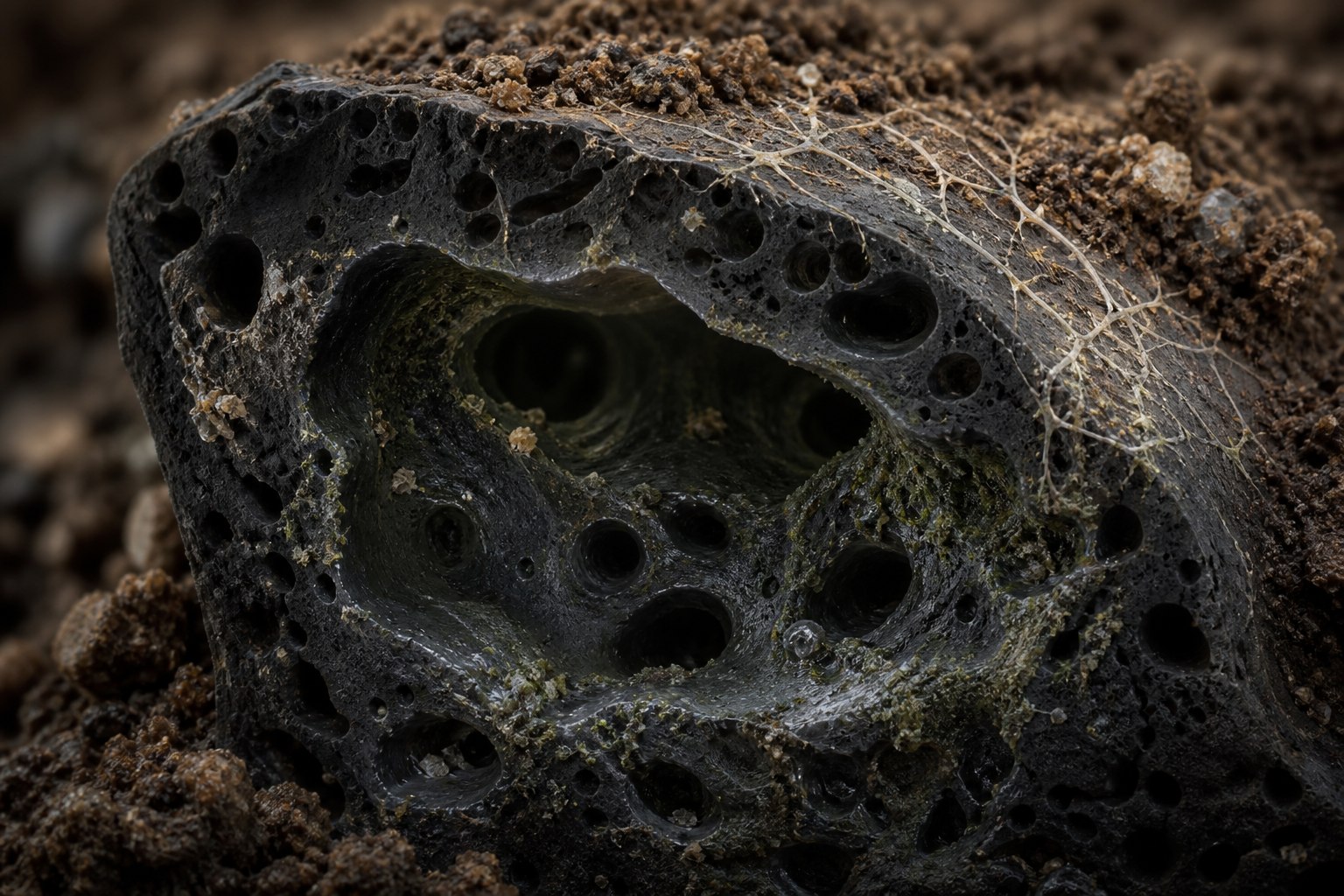
Biochar properties depend on its feedstock and production. Suitable biochars may contribute pore space, surface chemistry, water retention or changes in soil acidity. As biochar ages, its surfaces react with soil minerals and organic compounds. It can become incorporated into aggregates and develop a different interface from the freshly produced material.
But pores alone do not guarantee a thriving microbial community. Organisms also need suitable moisture, temperature, food and chemical conditions. Some pores may be too small or inaccessible; some chars may initially contain compounds or salts that are unsuitable for particular organisms.
What biology contributes
Soil microorganisms participate in decomposition, nutrient transformations and interactions with roots. Mycorrhizal fungi form associations with many plants and can create an additional pathway for phosphorus uptake. Other organisms influence nitrogen, phosphorus, sulphur and micronutrient cycling in different ways.
The word “microbe” is not automatically positive. Effect depends on the organism, viability, crop, soil, application and competition with the existing community. A biological input therefore needs both quality control and a supportive environment.
Why minerals still matter
Plants cannot build biomass from carbon and microbes alone. They require nitrogen, phosphorus, potassium, sulphur and other essential elements in appropriate amounts and forms. Organic or biological farming does not remove this basic requirement; it changes how nutrient sources and cycles are managed.
Biochar may influence nutrient retention and availability, but it does not create elements that are absent. Research syntheses show that responses of phosphorus and nitrogen vary with biochar characteristics, soil pH, carbon-to-nitrogen ratio, fertilizer combination and time. This is a reason for better formulation and testing—not for universal claims.
Soil fertility is not chemistry versus biology. It is the management of chemistry through a living, physical system.
What integration should mean
Integration does not mean mixing the maximum number of ingredients. It means designing around a clear function:
- What limitation does the soil have?
- Which crop stage or root-zone process is being supported?
- Does the carbon material have appropriate properties?
- Are organisms viable and relevant?
- Which nutrients are present, and in what forms?
- Could pH, salts or application rate create an unintended effect?
- How will the product complement—not duplicate—the existing nutrient program?
Good biological and biochar-based products should be evaluated with the same discipline expected from other agricultural inputs. The goal is not to replace evidence with the word “natural.” The goal is to develop inputs that work with biological processes while meeting real nutritional needs.