In brief
- Biochar contains pores across a wide range of sizes, but not every pore is usable by microorganisms.
- Biochar can change moisture, pH, nutrients and surfaces in the surrounding soil.
- The biologically active zone around a biochar particle may be as important as organisms living inside it.
- Habitat claims must consider the specific biochar, soil and time after application.
The attractive habitat idea
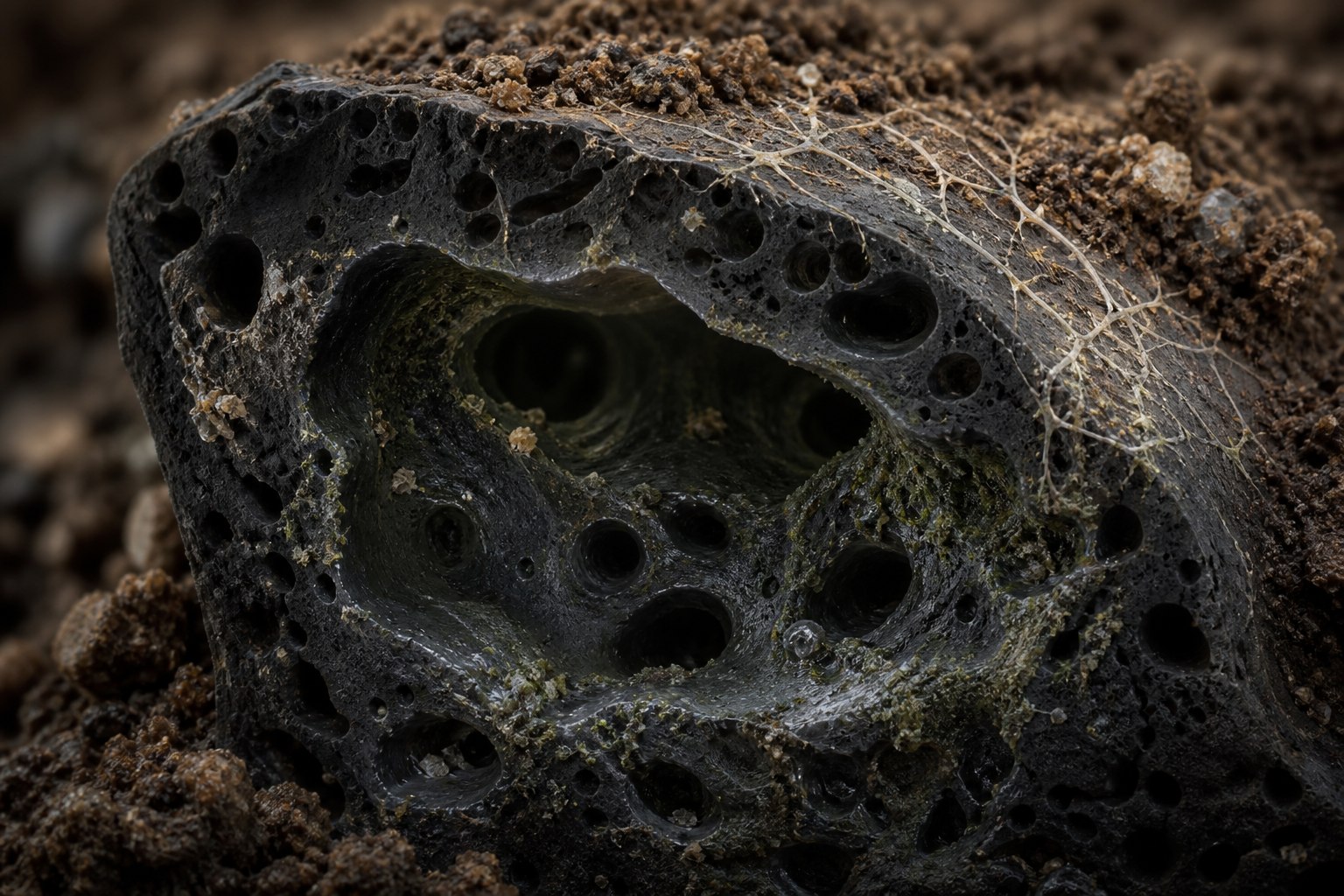
Under a microscope, many biochars reveal channels inherited from plant tissue and smaller pores created during heating. It is easy to imagine bacteria, fungi, water and nutrients occupying this structure. Protected pore space could potentially reduce exposure to drying, grazing organisms or physical disturbance.
However, the scale matters. Many pores are too small for whole microbial cells. Larger channels may be accessible but dry, chemically unsuitable or poorly connected to food. A freshly produced surface is also different from a surface that has spent months interacting with soil, roots and organic compounds.
What research found in the charosphere
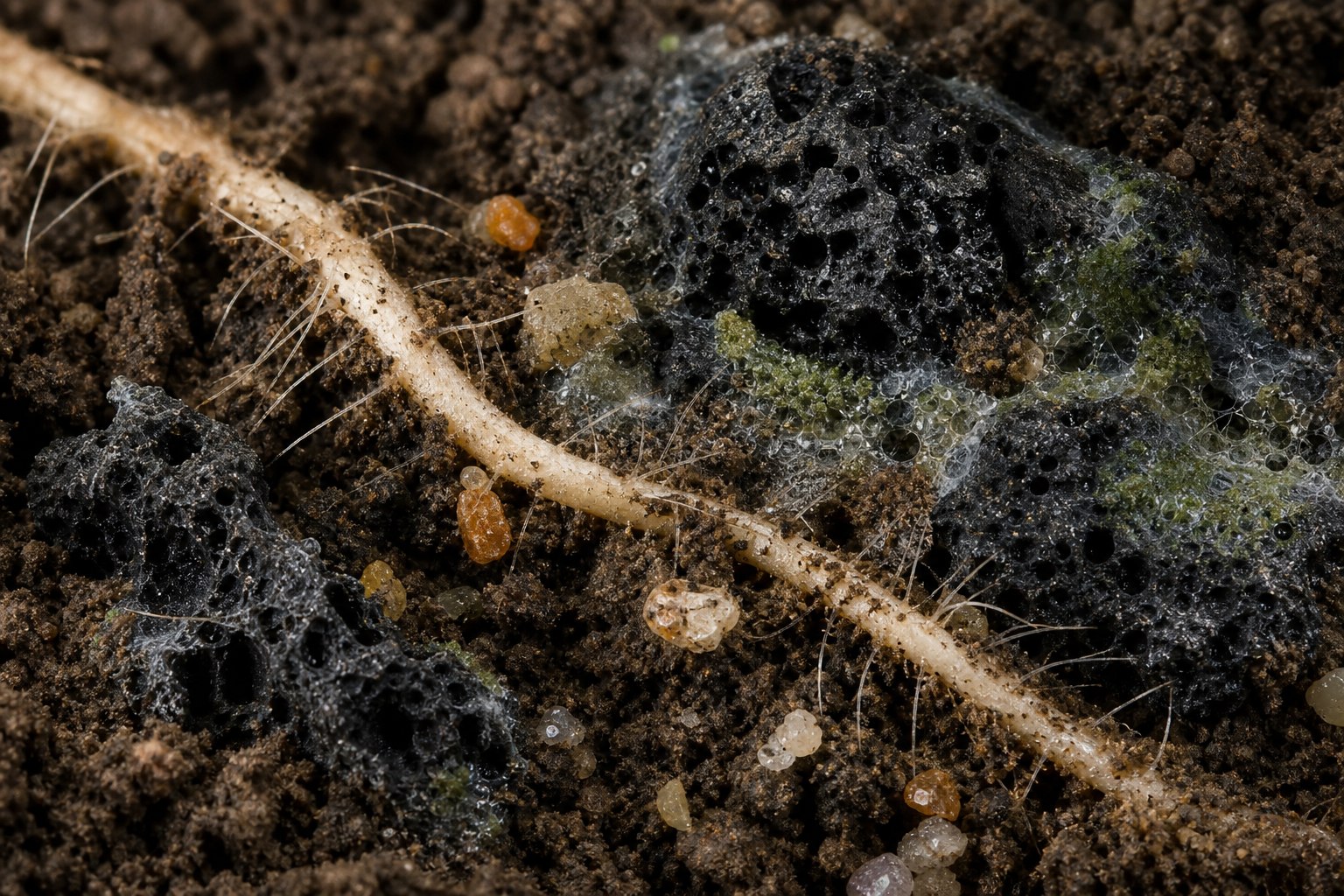
A useful study by Quilliam and colleagues examined field-aged biochar and questioned whether the material itself provided significant microbial habitat. Microbial colonisation on the biochar was sparse. At the same time, the soil immediately surrounding the particles—the “charosphere”—showed greater microbial activity than the biochar surface.
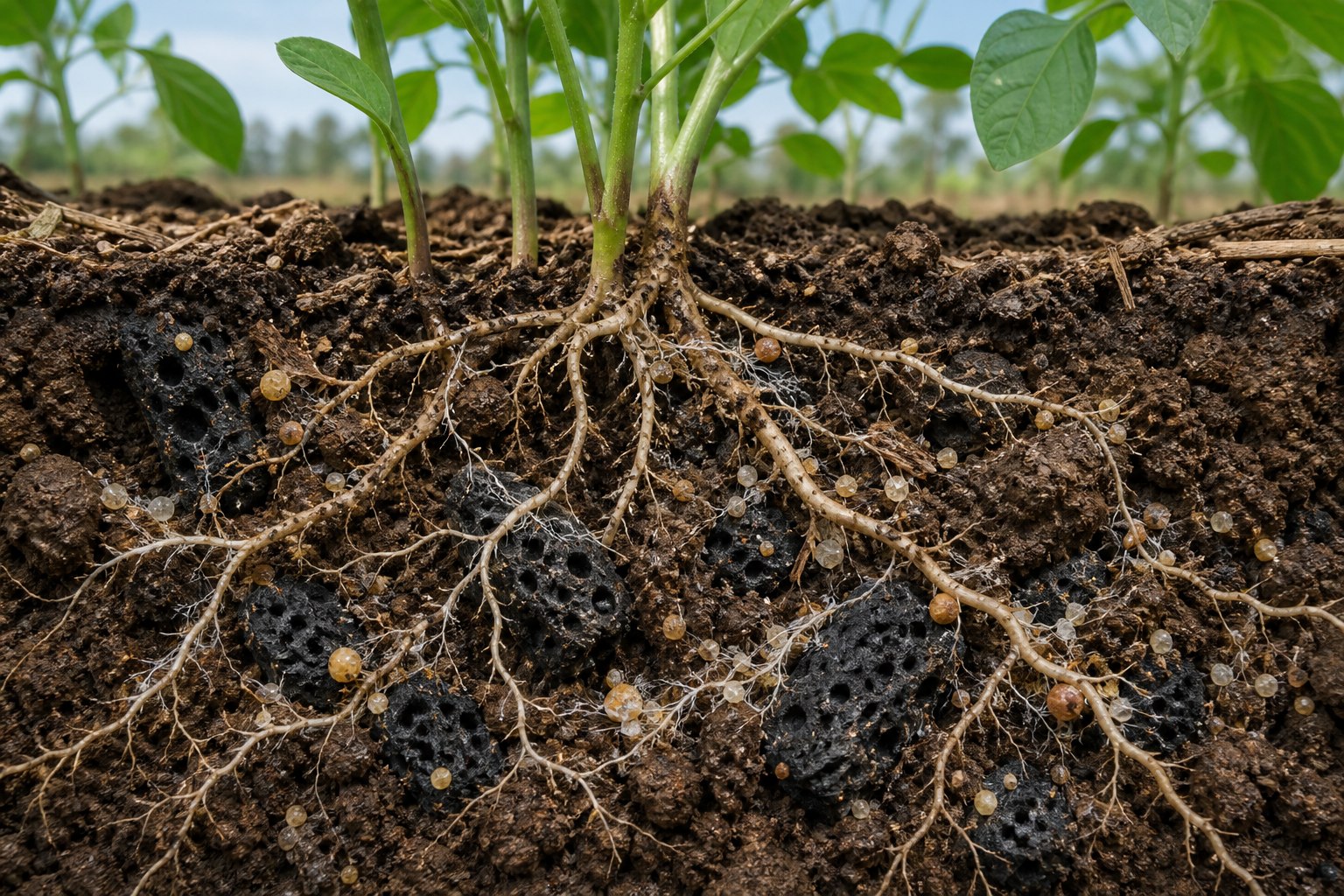
This does not prove that pores are irrelevant. It shows that the mechanism is more complex than a simple apartment-building metaphor. Biochar may influence biology by changing the nearby environment, adsorbing organic compounds, holding moisture, altering pH or interacting with roots and soil aggregates.
Later reviews describe how biochar surfaces change through dissolution, oxidation, mineral reactions and aging. Those processes can influence where water and compounds accumulate and how organisms respond.
A pore is potential habitat, not guaranteed habitat.
What determines colonisation
Factors that can influence biological occupation include:
- Pore-size distribution and connectivity.
- Biochar pH, salts, ash and remaining volatile compounds.
- Moisture and oxygen conditions.
- The presence of organic food sources.
- Contact with compost, manure, roots or soil minerals.
- The existing microbial community.
- Time since the material entered the soil.
Fungal hyphae, bacteria and microbial biofilms also occupy very different spatial scales. A surface that supports one group may not support another in the same way.
Why conditioning is scientifically interesting
If raw biochar has empty surfaces but little accessible food, combining it with organic matter, fermentation products, nutrients or selected biology may change its initial interactions with soil. Composting and other conditioning approaches are therefore active areas of research.
The challenge is to avoid assuming that any inoculation will survive or remain effective. Organism identity, formulation, storage, moisture and field conditions all matter. The most valuable work connects laboratory characterization with field performance over time.
For farmers and partners, the practical lesson is simple: look beyond a photograph of pores. Ask what occupies those pores, how the material was prepared, what the surrounding soil needs and what evidence supports the intended use.