In brief
- Soil organic carbon is the carbon component of soil organic matter.
- It supports physical structure, water relations, nutrient cycling and soil biology.
- A single percentage does not fully describe soil health; texture, depth, climate and management affect interpretation.
- Rebuilding carbon requires continuous biological inputs and sound soil management, not one isolated product.
Carbon is part of the soil system
When crop residues, roots, manures and other biological materials enter soil, microorganisms transform them. Some carbon returns to the atmosphere through respiration. Some becomes microbial biomass, organic compounds or carbon associated with soil aggregates and minerals. The result is a dynamic pool rather than a permanent store of undecomposed residues.
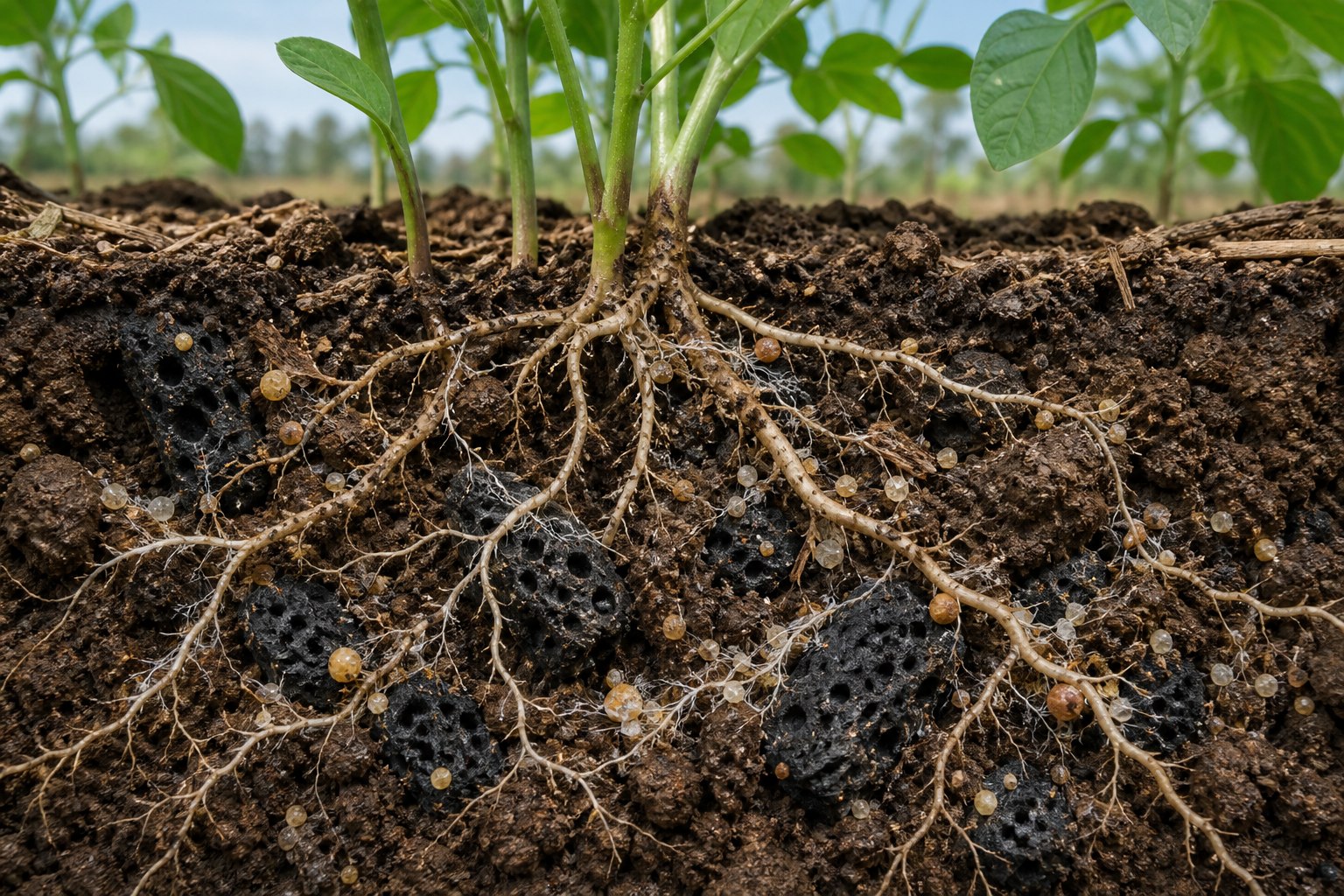
Soil organic matter influences aggregation, pore space and the soil's capacity to hold water and exchange nutrients. It also supplies energy to much of the soil food web. Because carbon is connected to so many processes, declining organic carbon can be both a symptom and a driver of weaker soil function.
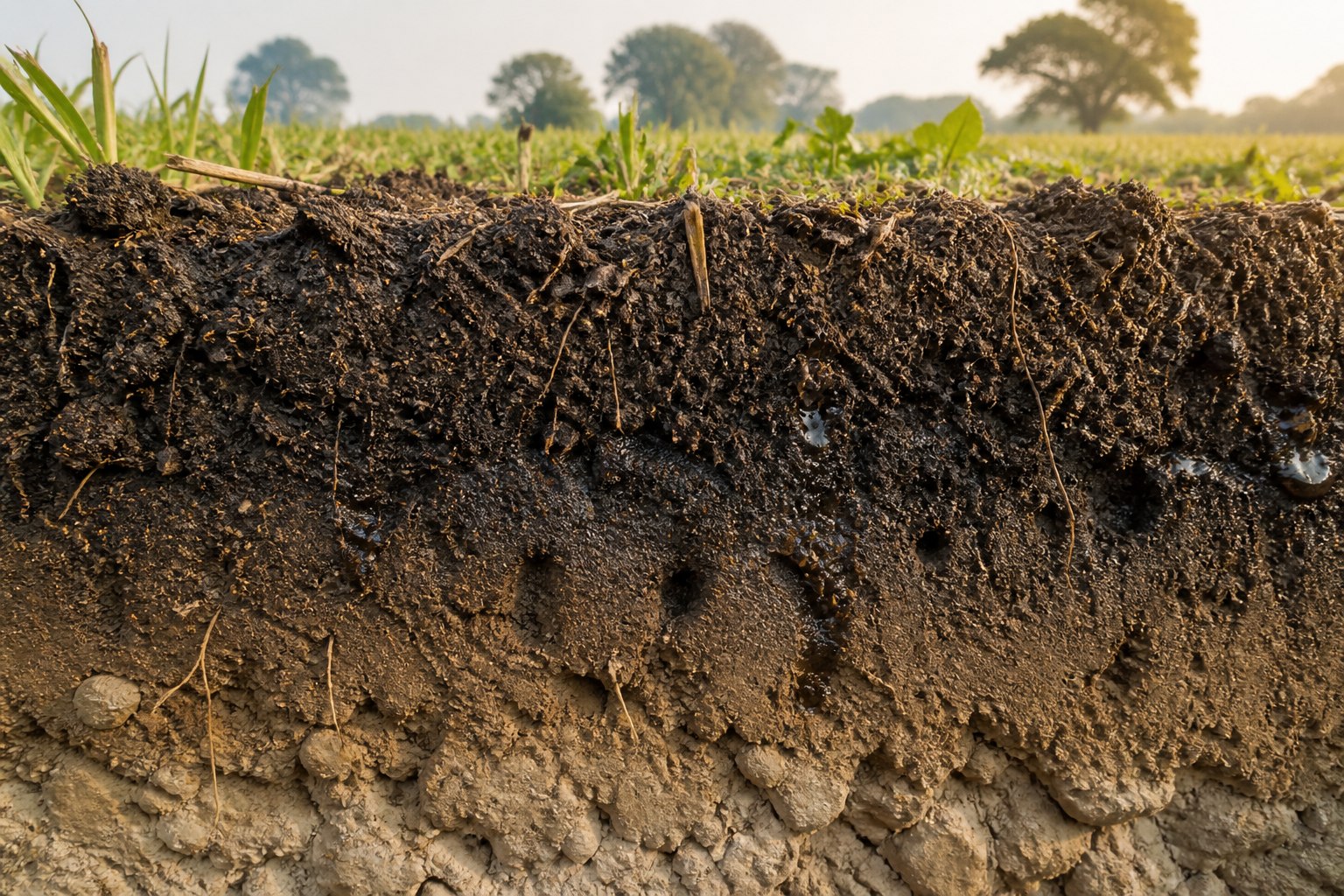
The Food and Agriculture Organization has highlighted low soil organic carbon as a major concern in India and reported a national average around 0.54 percent. That figure communicates the scale of the challenge, but farm decisions still require local measurement. Carbon can vary greatly between regions, soil types, land uses and sampling depths.
Why carbon can decline
Agricultural soil loses carbon when outputs repeatedly exceed inputs. Removal or burning of residues, erosion, low biomass return, intensive disturbance and insufficient organic additions can all contribute. Warm conditions may accelerate biological decomposition. Bare soil is also more exposed to erosion and temperature extremes.
This does not mean tillage or fertilizer alone explains every decline. Soil carbon is affected by a combination of climate, crop productivity, rooting, residue management, manure availability, erosion and the mineral composition of the soil.
What rebuilding requires
There is no universal recipe. Depending on the farming system, useful approaches may include:
- Returning appropriate crop residues instead of losing all biomass from the field.
- Applying well-managed manures, composts or other safe organic resources.
- Growing diverse rotations, cover crops or crops with stronger root inputs where practical.
- Reducing avoidable erosion and maintaining soil cover.
- Using balanced plant nutrition so crops can produce sufficient biomass and roots.
- Avoiding unnecessary disturbance while managing weeds and residues realistically.
- Adding stable carbon materials where quality, economics and local evidence support their use.
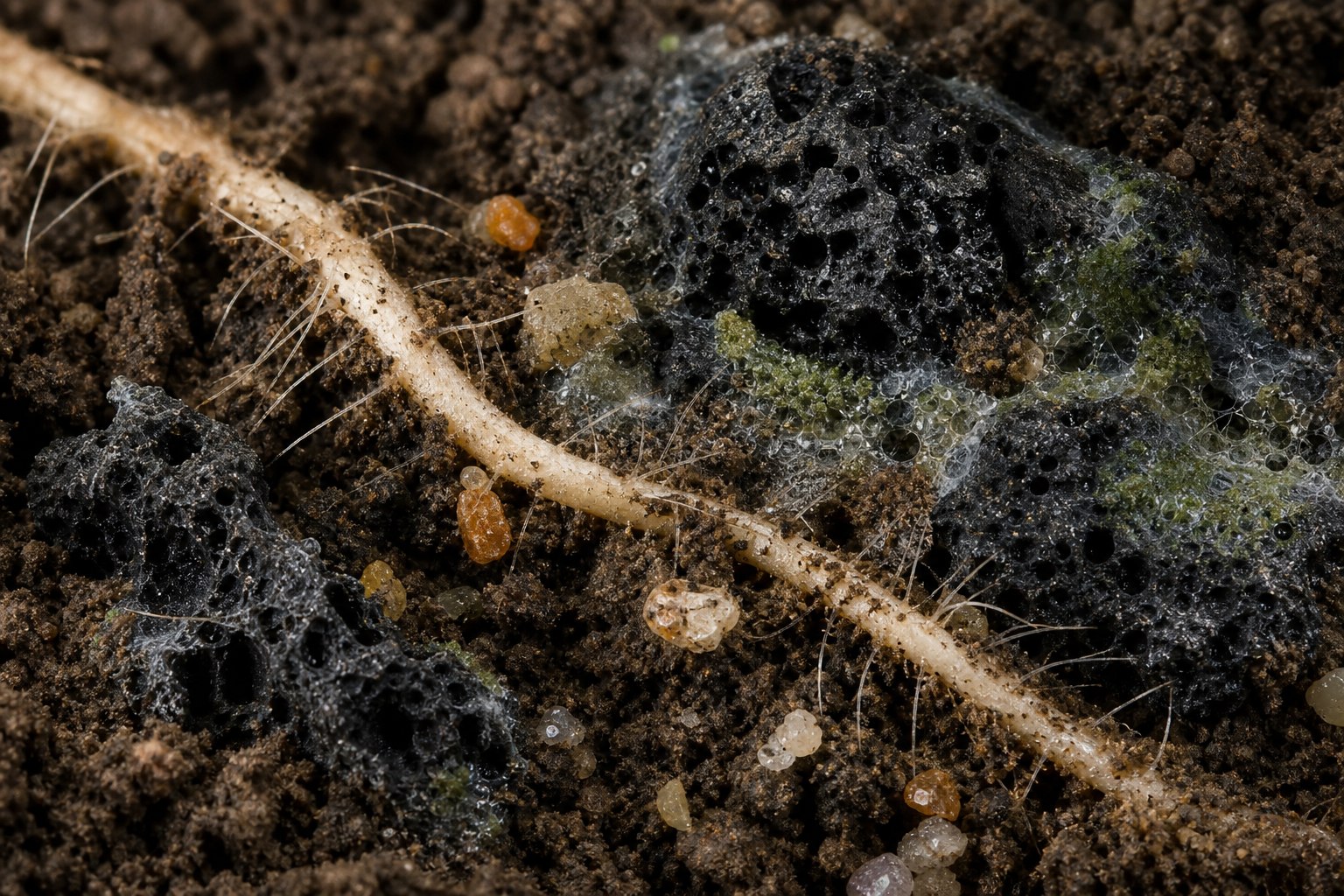
Biochar is relevant because part of its carbon is relatively resistant to decomposition. It may also influence the soil environment around more rapidly cycling organic matter. But biochar should complement fresh biological inputs, roots and good management—not replace them. Living soil needs both durable habitat and ongoing sources of energy.
Rebuilding soil carbon is a continuing farm process. It cannot be reduced to adding one black material once.
Measure trends, not only claims
Soil testing can establish a baseline, but sampling must be consistent. Differences in field position, depth, season and laboratory method can create misleading comparisons. For long-term learning, samples should come from comparable locations and depths, with records of crop, residue and nutrient management.
Farmers also observe practical indicators: infiltration, surface crusting, aggregation, ease of cultivation, root development and biological activity. These observations do not replace laboratory analysis, but they help connect a carbon number with field function.
India's soil-carbon challenge is therefore not only about storing carbon. It is about rebuilding the capacity of soil to support productive, resource-efficient and resilient agriculture.