In brief
- “Biochar” describes a diverse family of materials, not one standard ingredient.
- Soil acidity, texture, fertility, climate and crop all influence response.
- Application rate, placement, nutrient combination and trial duration can change the result.
- Good research asks which biochar works, where, why and for how long.
The average can hide the useful answer
One study reports a yield increase. Another reports no significant change. A third finds a benefit only when biochar is combined with fertilizer or compost. This can look confusing if the question is simply “Does biochar work?”
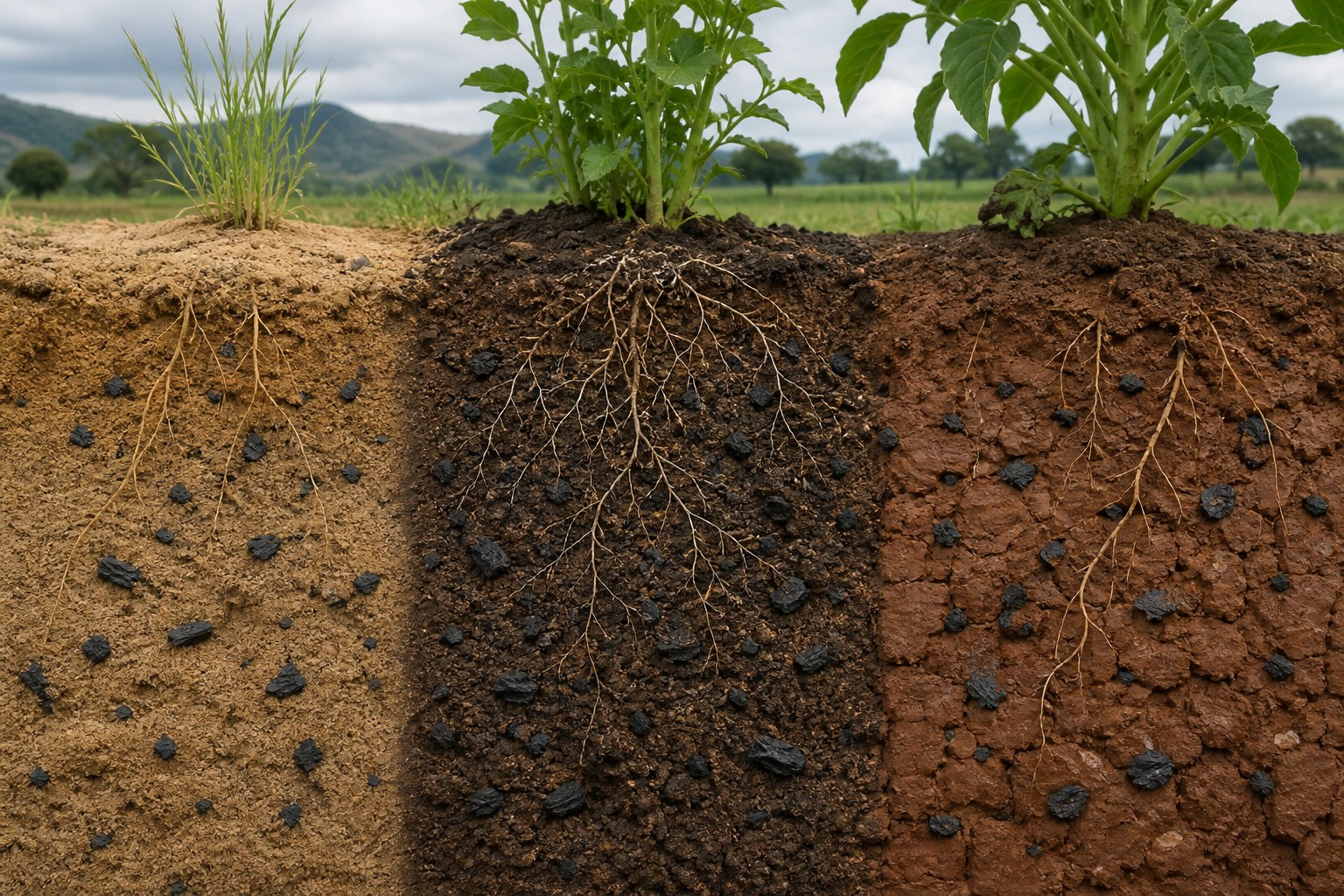
The problem is that this question combines many different materials and environments. A high-ash manure biochar produced at a lower temperature is chemically different from a high-carbon woody biochar produced at a higher temperature. A sandy acidic soil creates different constraints from a fertile clay soil. A maize crop in a humid tropical region does not experience the same water and nutrient conditions as a temperate crop.
Material differences
Biochar characteristics can vary with:
- Feedstock composition and contamination risk.
- Pyrolysis temperature, heating rate and residence time.
- Carbon, ash, pH and electrical conductivity.
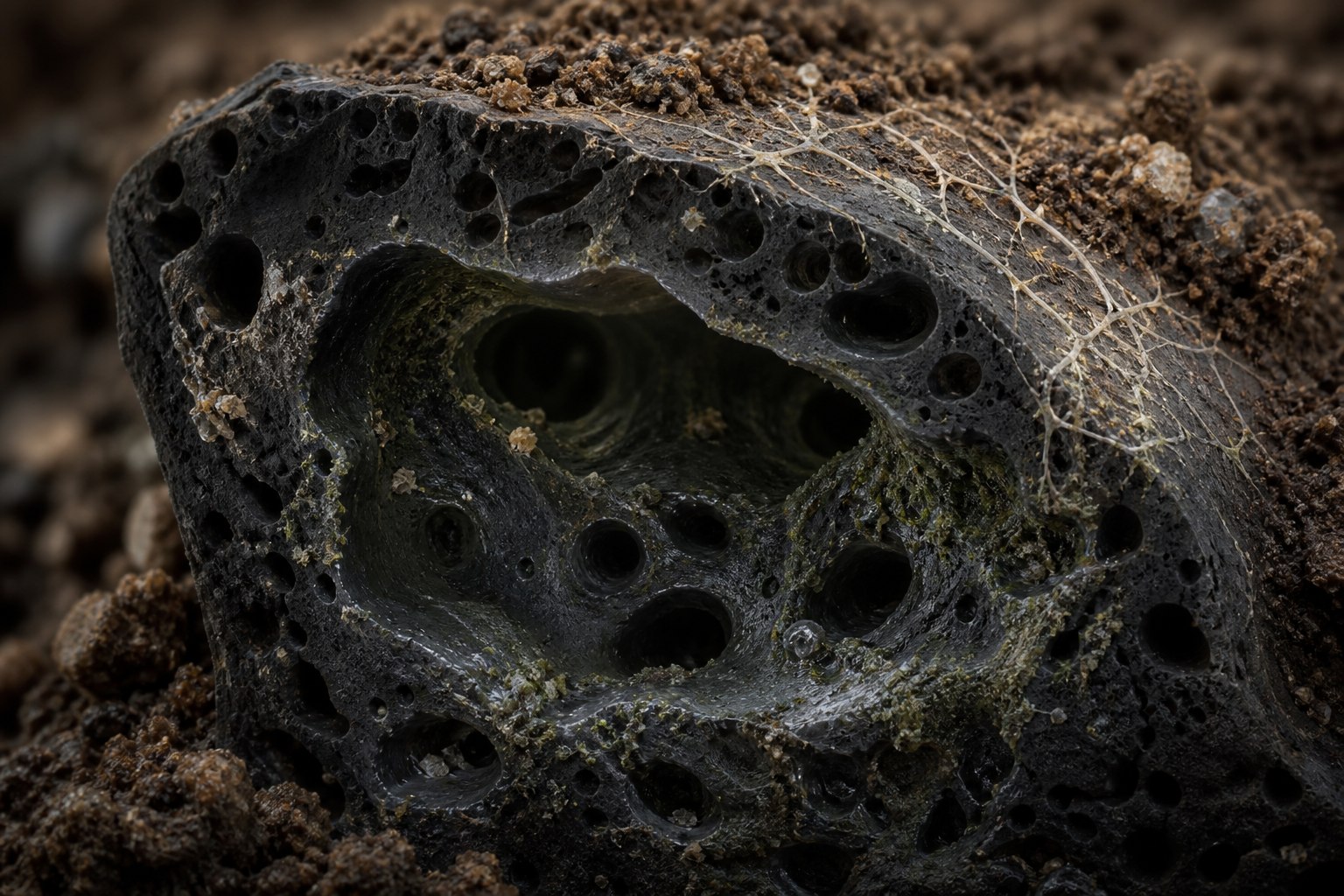
- Surface functional groups and pore structure.
- Particle size and post-production treatment.
- Nutrients or biological components added before use.
Using the word biochar without reporting these properties makes comparison difficult.
Soil and climate differences
Meta-analysis has found stronger average crop-yield responses in tropical than temperate regions. One explanation is that biochar may produce a larger response where acidity, nutrient constraints or weathered soils create greater room for improvement. That does not mean every tropical soil will respond or that temperate soils never benefit.
Water availability also changes the value of pore space and soil structure. Liming effects matter more in some acidic soils. Nutrient retention may matter more in coarse-textured soils with higher leaching risk. In a soil with few relevant constraints, adding biochar may not produce a measurable crop response.
Management differences
Rate and placement influence how much material contacts roots and soil. Combining biochar with compost, manure or mineral fertilizer changes nutrient supply. A short pot trial can reveal mechanisms but may not predict field economics. A one-season field trial may miss aging effects that develop over months or years.
This is why a negative result can be valuable. It may show that the selected material did not address the limiting factor, the rate was impractical, nutrients remained limiting or the trial was too short for the proposed mechanism.
Variation is not a reason to abandon biochar. It is a reason to stop treating every biochar and every soil as interchangeable.
How to read a study more carefully
Before applying a research conclusion, ask:
- What was the feedstock and production condition?
- Were key biochar properties reported?
- What soil type, pH and baseline fertility were used?
- Was the study conducted in a pot, greenhouse or field?
- What crop and climate were involved?
- Was biochar used alone or with nutrients?
- What was the rate, and is it economically realistic?
- How long did the experiment run?
- Were results statistically and practically meaningful?
Carbonify's research approach should therefore focus on fit: matching material, biological function, mineral nutrition and field context. The aim is not to find one universal biochar. It is to develop repeatable solutions for defined agricultural needs.